ANEMOI - Towards minimal chemical pollution of offshore wind farms
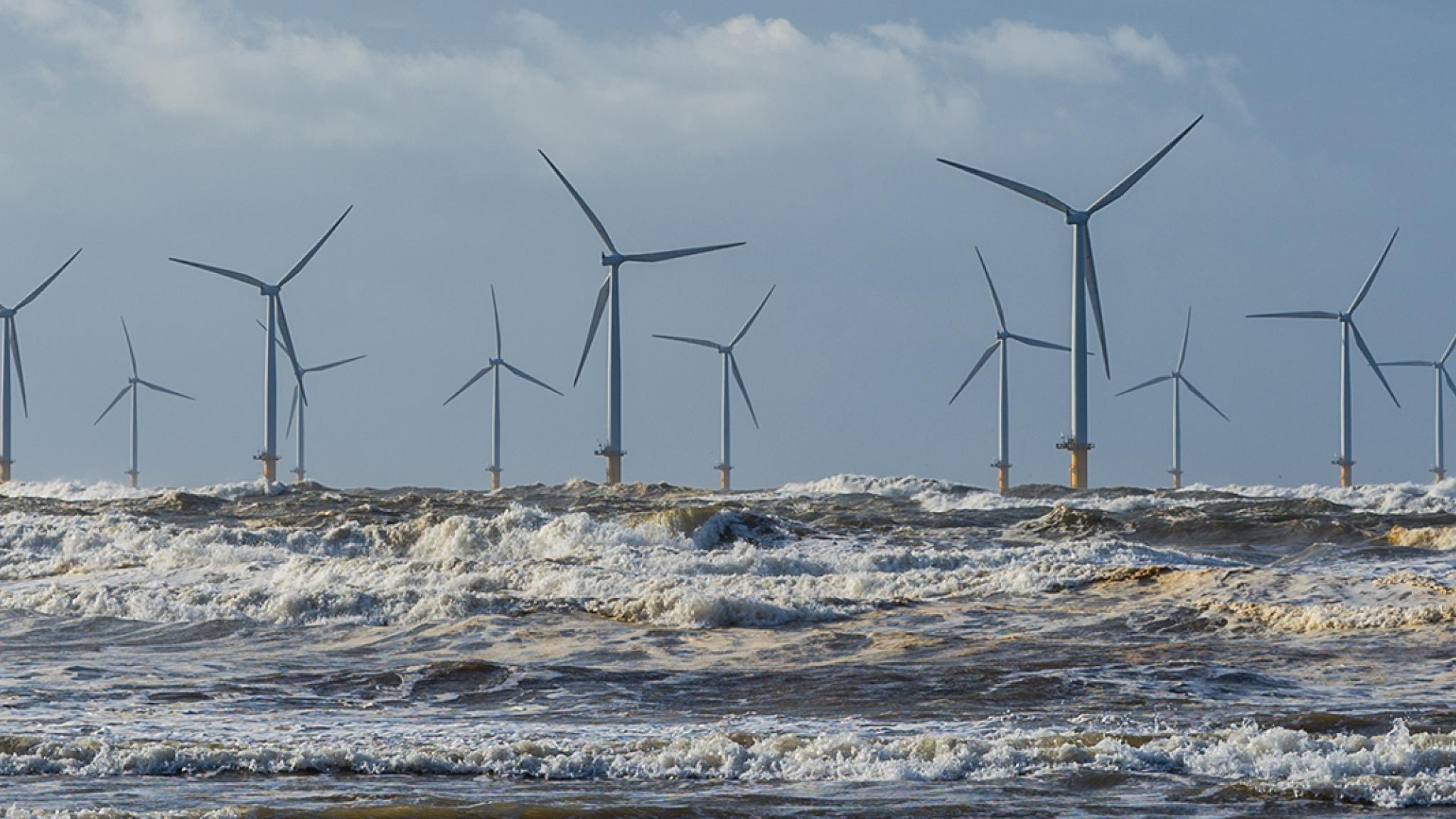
Offshore wind energy offers many advantages: next to the primary aim of renewable energy production, offshore wind farms (OWFs) also offer opportunities to nature conservation and aquaculture activities. There are multiple research projects into the environmental impact of OWFs in the North Sea. Underwater noise and the exclusion of fisheries is also studied. Potential chemical contamination with dissolved and particulate pollutants from wind turbines is investigated from this year as well by an international team of researchers, including Johan van der Molen and Katherina Alter of the Royal Netherlands Institute for Sea Research (NIOZ).

Potential chemical pollution
The Anemoi project aims to identify relevant pollutants from wind turbines. The project also assesses the effect of microplastics from wind turbines on for instance filter feeders like mussels. “NIOZ researchers are focusing mainly on possible effects on shellfish, and how they might affect the biochemical functions of the North Sea,” says Van der Molen. “Wind turbine foundations contain corrosion protection systems, which could leach metals such as aluminium or zinc into the sea. At NIOZ, we are going to study the effect of paint chips, microplastics and dissolved metals on filter feeders.”
Sustainable solutions
The Anemoi project also investigates sustainable and non-harmful solutions, for instance alternative corrosion protection systems for OWFs. To reach the project goals, Anemoi will work in close collaboration and interaction with the offshore wind farm sector and with policymakers.
International collaboration
Within the Anemoi project, researchers from 11 European institutes will work in close collaboration with policy makers and the OWF industry. The kick-off meeting is planned on 30 and 31 May 2023 in Hamburg, Germany. The project is funded by INTERREG North Sea and additional funding comes from the Provincie West-Vlaanderen (Belgium) and VLAIO (Belgium).